Inclusive participation
Whose knowledge, goals, and aspirations shape the system? We begin with local strengths and make absences visible.
HCI · HCI4D · ICTD · LLMs
We study how AI shapes learning, access to information, and participation in everyday life. At the Thoughtful AI Lab, we design with communities and ask what people can still do when AI assistance ends.
01 / Our orientation
We evaluate AI by what it leaves people able to do.
A direct answer can be useful. But useful assistance should also make room for people to consider options, navigate their own context, and act with greater understanding and agency the next time.
02 / Design principles
We work across the full lifecycle of AI assistance: who shapes it, how it responds in context, and what capabilities remain.
Whose knowledge, goals, and aspirations shape the system? We begin with local strengths and make absences visible.
How should support change as needs, risks, language, and infrastructure change? We design for care, uncertainty, and human handoffs.
What can people still do after AI assistance ends? We look beyond task completion to learning, confidence, agency, and solidarity.
03 / Research in practice
Our work spans commercial AI, sensitive health and wellness support, and teacher learning in low-infrastructure settings. These are not just test beds: they reveal who current systems serve, where they break down, and how they can strengthen people over time.
Explore related publications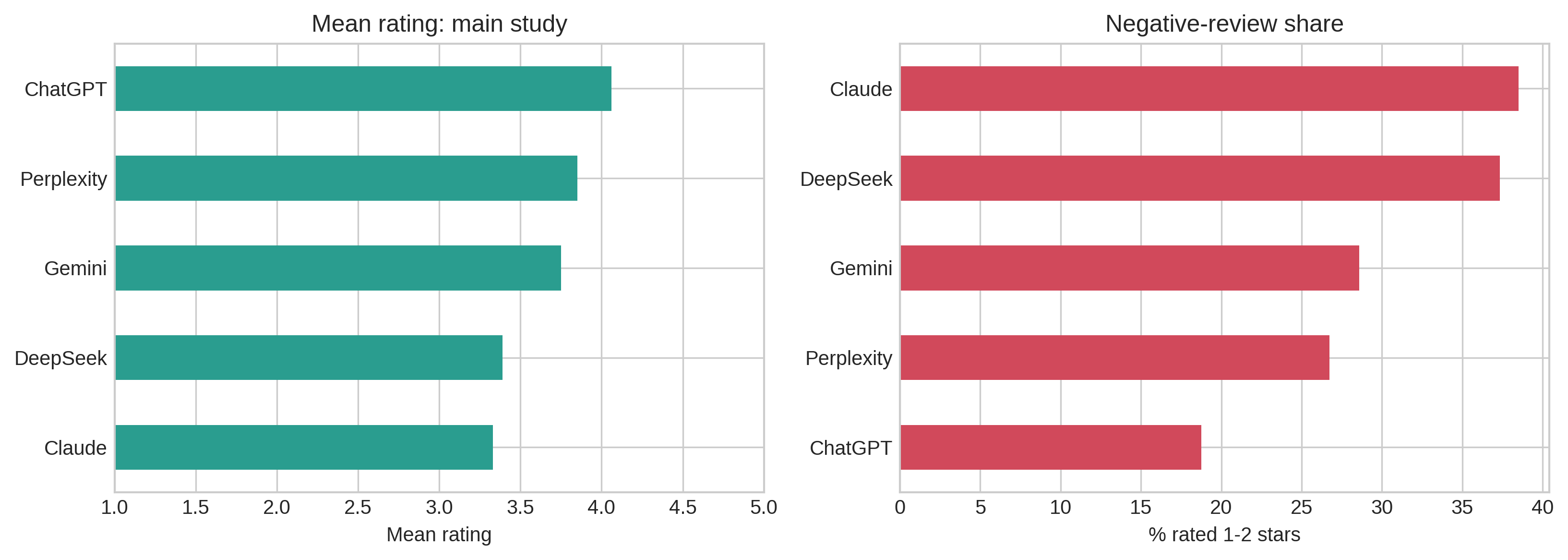
Before / Commercial AI
App reviews make visible what answer-first assistants promise, and the context, reliability, and safety gaps people encounter in practice.
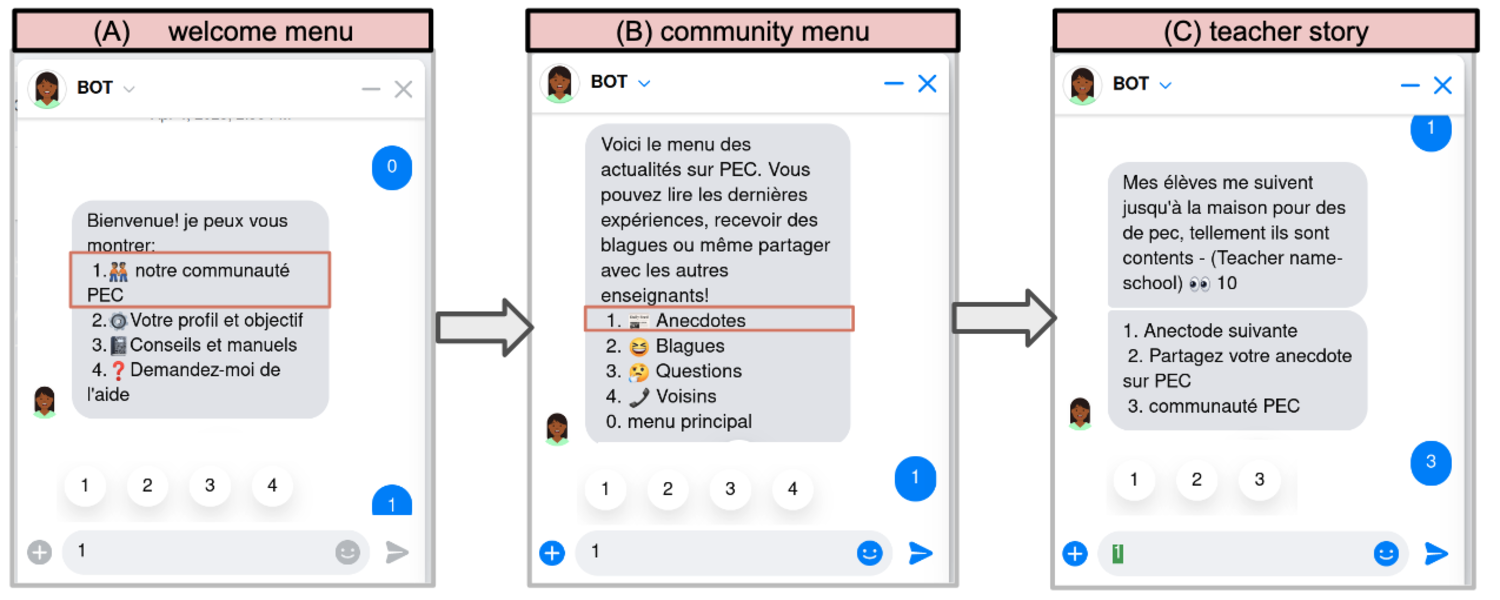
After / Teacher learning
A chatbot can scaffold connection, reflection, and peer support—but the lasting outcome is teachers’ capacity to help one another.
04 / Publications
Selected work on conversational AI, learning, reflection, and technology in the Global South. The full record is on Google Scholar.
Hamayoon Behmanush, Freshta Akhtari, Ingmar Weber, and Vikram Kamath Cannanure
Proceedings of the 2026 ACM Conference on Fairness, Accountability, and Transparency (FAccT), 6203-6225.
Copy the BibTeX below, or find this record in Google Scholar.
@inproceedings{behmanush2026safe,
  title = {Designing Safe and Accountable GenAI as a Learning Companion with Women Banned from Formal Education},
  author = {Behmanush, Hamayoon and Akhtari, Freshta and Weber, Ingmar and Cannanure, Vikram Kamath},
  booktitle = {Proceedings of the 2026 ACM Conference on Fairness, Accountability, and Transparency},
  pages = {6203--6225},
  year = {2026},
  publisher = {ACM},
  doi = {10.1145/3805689.3806466}
}
Sharon Wolf, Amy Ogan, Kaja K. Jasińska, Samuel Kembou, Vikram Kamath Cannanure, Hannah Whitehead, Julianna Corbett, Fabrice Tanoh, Brooke Wortsman, Joshua Lim, Hui Zhao, and Anahita Kumar
American Educational Research Journal.
Copy the BibTeX below, or find this record in Google Scholar.
@article{wolf2026impacts,
  title = {Impacts of Targeted Instruction with Mobile-Based Support on Teachers and Students in Rural Côte d’Ivoire},
  author = {Wolf, Sharon and Ogan, Amy and Jasińska, Kaja K. and Kembou, Samuel and Cannanure, Vikram Kamath and Whitehead, Hannah and Corbett, Julianna and Tanoh, Fabrice and Wortsman, Brooke and Lim, Joshua and Zhao, Hui and Kumar, Anahita},
  journal = {American Educational Research Journal},
  year = {2026},
  doi = {10.3102/00028312261430679}
}
Vikram Kamath Cannanure, Bruno Yinkfu, Douglas Bryan, Mati Amin, and Ingmar Weber
Artificial Intelligence in Education (AIED 2026), Communications in Computer and Information Science, 249-261.
Copy the BibTeX below, or find this record in Google Scholar.
@inproceedings{cannanure2026whatsapp,
  title = {Teacher Professional Development on WhatsApp and LLMs: Early Lessons from Cameroon},
  author = {Cannanure, Vikram Kamath and Yinkfu, Bruno and Bryan, Douglas and Amin, Mati and Weber, Ingmar},
  booktitle = {Artificial Intelligence in Education (AIED 2026)},
  series = {Communications in Computer and Information Science},
  pages = {249--261},
  year = {2026},
  publisher = {Springer Nature Switzerland},
  doi = {10.1007/978-3-032-29791-4_18}
}
Vikram Kamath Cannanure, Tricia J. Ngoon, Sharon Wolf, Kaja K. Jasińska, Tim Brown, and Amy Ogan
ACM Journal on Computing and Sustainable Societies, 3(4), 1-23.
Copy the BibTeX below, or find this record in Google Scholar.
@article{cannanure2025designbased,
  title = {A Design-Based Research Approach to Bridge Teacher Aspirations and Goal-Setting},
  author = {Cannanure, Vikram Kamath and Ngoon, Tricia J. and Wolf, Sharon and Jasińska, Kaja K. and Brown, Tim and Ogan, Amy},
  journal = {ACM Journal on Computing and Sustainable Societies},
  volume = {3},
  number = {4},
  pages = {1--23},
  year = {2025},
  doi = {10.1145/3736648}
}
Riti Verma, Ingmar Weber, and Vikram Kamath Cannanure
ACM Journal on Computing and Sustainable Societies, 3(3), Article 20, 1-23.
Copy the BibTeX below, or find this record in Google Scholar.
@article{verma2025exploring,
  title = {Exploring AI in Education: Child-Computer Interaction in the Global South},
  author = {Verma, Riti and Weber, Ingmar and Cannanure, Vikram Kamath},
  journal = {ACM Journal on Computing and Sustainable Societies},
  volume = {3},
  number = {3},
  articleno = {20},
  year = {2025},
  doi = {10.1145/3736645}
}
05 / Join the conversation
The lab is led by Vikram Kamath Cannanure, a postdoctoral fellow at Saarland University and a KCRC Fellow at the Kigali Collaborative Research Centre. KCRC is a research community based at Carnegie Mellon University Africa in Kigali. Our AI and Society research draws on Human-Computer Interaction (HCI), HCI for development (HCI4D), and information and communication technologies for development (ICTD). We collaborate with communities, researchers, practitioners, and public-interest organizations.
Our AI deployments across the globe build on fieldwork and collaborations in India, Cameroon, Côte d’Ivoire, Rwanda, Afghanistan, South Africa, Macau, Germany, and the United States. Current projects include health chatbots in rural India, LLM-based teacher learning on WhatsApp in Cameroon, and generative AI learning support with women in Afghanistan. Vikram’s PhD chatbot supported 400+ teachers and 10,000+ students in rural Côte d’Ivoire.
We welcome collaborators who care about participatory AI, learning, health and wellbeing, civic participation, multilingual systems, and technology that works in low-resource contexts. If that sounds like your work, get in touch.